MapleStory : Idle RPG
- 4.4
- Rating
- 1.00M
- Installs
- Free
- Price

 Analysis by App-foxy
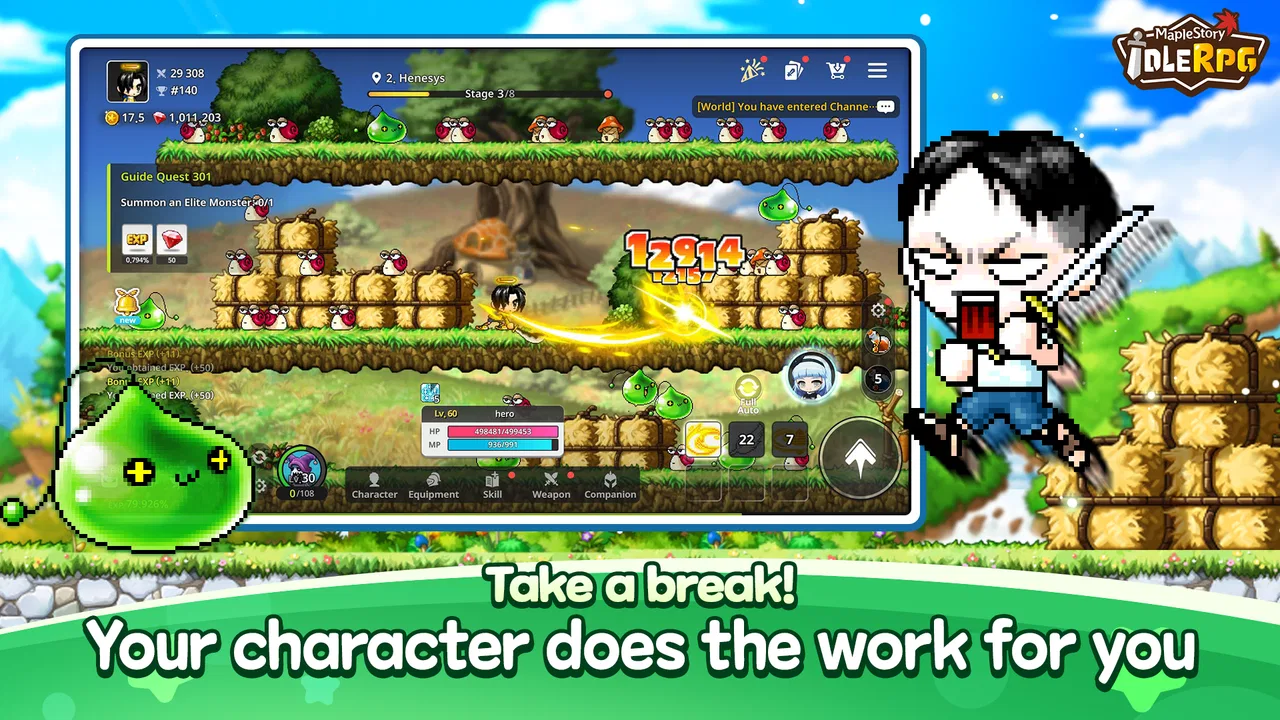
MapleStory: Idle RPG takes a familiar 2D role-playing world and turns it into something I can check in short bursts rather than play through every battle manually. The first impression is simple: my character moves into combat, enemies fall, rewards appear, and the next improvement is usually close enough to make me want one more look. That rhythm is the real identity of the game. It is not trying to replace a traditional, hands-on MapleStory session; it reshapes the series into an idle RPG built around progress that continues while I am away.
After spending time with it, I found the appeal strongest when I treated it as a companion game for spare moments. It works well when I have a few minutes while waiting for an appointment, during a commute, or between other tasks. The free entry point makes it easy to try, although the in-app purchase range, from $0.99 to $219.00 per item, means I would approach spending carefully. The game is made by NEXON Company, carries an Everyone 10+ age rating, and is available for devices running Android 6.0 or later.
How the idle loop feels from the first battle onward
I find the opening stretch works best when I treat each battle as a quick read on my character’s progress, not a test of reflexes. That makes it easier to spot whether I should simply let the game run or pause to make a considered improvement. Once that rhythm feels familiar, the next useful question is how to make each brief return count.
You May Also Like

 Blood Strike: 2.5 Anniversary
Blood Strike’s Loadouts Turn Every Drop Into a Tactical Gamble
A close look at Blood Strike’s custom loadouts: how fast access to signature weapons reshapes its battle royale rhythm, rewards preparation, and narrows the gap between fights.

 Pandora - Music & Podcasts
Pandora’s Music Is Easy to Start, but Harder to Recover
Pandora’s strength is its low-effort path from a seed to a station. Its weak spot is how much confidence it asks you to place in connection, setup, and quiet recovery.

 8 Ball Pool
 Is Built on Rivalries, Rematches, and Routine
A close look at the rivalries, rematches, shared routines, and unanswered safety questions that turn a quick pool match into a persistent mobile community.

 Samsung Music
’s Quiet Strength Is Playing What You Already Own
Its reach comes less from spectacle than from dependable access to a personal library. That simplicity is both the app’s strongest retention engine and its ceiling.

 AccuWeather: Weather Radar
AccuWeather Review: A Quick, Clear Forecast for Everyday Decisions
For everyday plans, the best forecast is the one you can understand quickly. AccuWeather makes rain timing, radar, and local conditions easy to act on, with a few trade-offs.

 Hill Climb Racing
Why Hill Climb Racing Still Turns Crashes Into One More Run
A tiny car, a bumpy hill and one more upgrade: Hill Climb Racing keeps resurfacing because its simple chaos makes every near-miss feel personal.
More From Our News Desk
View All News


The first action is choosing what progress should look like
The opening decision is less about reflexes and more about direction. In a conventional action RPG, I would focus on movement, timing, and immediate attacks. Here, the important question is where I want my character’s automatic progress to lead. I begin by letting the character engage enemies, then I pay attention to the results: experience, equipment or other rewards, and the next obstacle that exposes whether my current setup is strong enough.
That change in emphasis matters. The game does not ask me to perform every attack, so the first action is really an investment in a plan. I decide whether to keep pushing forward or pause and improve the character. The choice is small, but it gives the automatic combat a purpose. Without that decision, idle battles would feel like a screensaver. With it, each return to the game has a clear question attached: did the latest upgrade make the next stretch easier?
I also like that the format reduces the pressure to be constantly available. If I only have a short window, I can open the game, collect what has accumulated, make an upgrade, and leave. That makes it more approachable than a traditional role-playing game for anyone who enjoys character growth but does not have time for a long uninterrupted session.
Feedback arrives in a steady rhythm
The feedback loop is built from visible changes rather than long periods of uncertainty. Combat produces rewards, rewards support improvements, and improvements let the character handle stronger encounters. I can usually understand why a battle went well or poorly without needing to study a complicated combat log. The game’s satisfaction comes from seeing a previously difficult point become manageable after a sensible adjustment.
This rhythm is also where the idle design can become repetitive. Since I am not manually controlling every fight, the excitement depends on the quality of the next decision. If the best move is always to collect currency and tap the most obvious upgrade, the experience can flatten into routine. I found myself enjoying it more when I stopped treating every reward as an instruction to spend immediately and instead looked at what was blocking progress.
That is one of the more useful habits I developed: I waited until a stage or encounter clearly slowed the character before investing heavily. Spending every reward as soon as it appeared felt satisfying for a moment, but saving resources for a meaningful improvement made the next return more noticeable. In an idle game, the timing of an upgrade can be as important as the upgrade itself because it gives the next session a measurable goal.
Rewards are valuable because they change the next session
Rewards are not only a collection of numbers rising on the screen. Their real value comes from what they allow me to do afterward. When a reward helps increase combat strength, unlocks a better path, or supports a more efficient build, it turns an otherwise passive battle into preparation for the next obstacle. That connection is what keeps the loop from feeling completely automatic.
I recommend looking at rewards in terms of bottlenecks rather than rarity alone. A flashy item is not necessarily the best immediate choice if the character is struggling because of a different weakness. I got more consistent progress by asking which improvement would remove the current obstacle, then using rewards with that purpose in mind. This is a small distinction, but it prevents the game from becoming a constant sequence of impulsive taps.
There is also a practical reason to check rewards before leaving the game. An idle RPG is most useful when I finish a short session with the character ready to continue. Collecting progress, applying the improvement that matters, and then setting the character back into the next stretch creates a clean handoff between sessions. If I simply open the game, watch the accumulated rewards, and close it without making a decision, I lose much of the point of returning.
The reset is what gives another session a reason to begin
Every short visit eventually reaches a natural reset. I collect what has built up, inspect the character’s condition, decide whether to upgrade, and send the character back into the next round of progress. The reset is not a dramatic restart; it is a preparation point. I leave with a new target, such as reaching the next barrier or testing whether a recent improvement is enough.
This structure suits people who prefer small, repeatable goals. I do not need to remember a complicated quest thread after putting the phone down. When I return, the game quickly tells me what happened and gives me a practical next step. That makes it a better fit for fragmented play than story-heavy role-playing games that depend on remembering dialogue, locations, and detailed objectives.
At the same time, the reset can feel too gentle for players who want a strong sense of adventure every time they play. The game’s progress is persistent and incremental, so a session may end with a modest improvement rather than a dramatic discovery. I would not choose this as my main role-playing game if what I want is constant exploration, precise combat, or a large amount of direct control.
Where the MapleStory identity helps
The MapleStory setting gives the idle structure more personality than a completely anonymous auto-battler. The visual style and familiar role-playing framework make the progression easier to settle into, especially for players who already like the series. Even without relying on long manual battles, the game feels connected to that world through its presentation and character-focused growth.
For me, the strongest advantage is the contrast between a recognizable universe and a low-effort play style. I can enjoy the idea of developing a MapleStory character without committing to the same kind of active session I might expect from a traditional online role-playing game. That makes it a useful alternative for an existing fan whose schedule has changed, or for a new player who likes the look of MapleStory but wants a simpler entry point.
However, the familiar name should not create the wrong expectation. This is an idle RPG first. If I am looking for the full feeling of controlling a character through every encounter, the automatic structure will feel limiting. The game’s strength is convenience and steady growth, not manual mastery.
A realistic everyday session
My most natural use case is a short check-in at the end of the day. I open the game, review how far the character progressed, collect the available rewards, and look for the first sign of resistance. If the character is still moving comfortably, I avoid unnecessary changes and let the next stretch begin. If progress has slowed, I choose one improvement aimed at that specific problem, then close the game.
The next morning, I have a clear reason to return: I want to see whether that decision worked. This is more satisfying than opening an idle game with no plan because the previous session leaves behind a small experiment. Did the character advance farther? Did the reward accumulation feel more useful? Did I spend too early? Those questions give the loop a little strategy without turning a casual game into homework.
Another good scenario is using it alongside a more demanding game. I can play a competitive or story-driven title when I have time, then use this one for a quieter break. The two experiences do not compete for the same kind of attention. MapleStory: Idle RPG is especially comfortable for moments when I want progress but do not want to concentrate on constant inputs.
Spending requires a deliberate approach
The game is free to start, which lowers the barrier to testing whether the idle format suits me. The presence of purchases from $0.99 to $219.00 per item changes how I evaluate the progression, though. I would not make a purchase simply because the game presents a temporary feeling of impatience. The whole point of idle design is that waiting and returning are part of the loop, so paying to remove every pause can also remove the reason to come back.
My advice is to play long enough to understand the normal rhythm before spending anything. First learn how quickly ordinary progress feels, how often upgrades matter, and whether the game remains enjoyable when I am not trying to accelerate everything. If the free experience already feels like a chore, a purchase is unlikely to fix the underlying mismatch. If the loop feels good and I want to support it, I would still set a firm personal limit rather than treating every offer as necessary.
This is also where the game may not suit younger players without guidance. The age rating is Everyone 10+, but the available purchase range is still worth discussing with a parent or guardian. A child may understand the combat and rewards while not recognizing how quickly optional spending can change the pace of progression.
How it compares with more active role-playing games
Compared with a traditional MapleStory experience or another hands-on role-playing game, this version asks much less of my attention. I do not need to master movement or react to every attack, and that makes it easier to fit into a busy day. The trade-off is that I give up much of the satisfaction that comes from personally executing a difficult battle.
Compared with a generic idle RPG, the MapleStory presentation is a meaningful advantage if I already enjoy the series’ world and character style. The familiar setting gives the progression a stronger identity. On the other hand, players who prefer deep manual systems may find that the recognizable theme cannot compensate for the reduced control.
I would choose this game over a conventional role-playing title when I want low-pressure progress, quick check-ins, and a character that keeps developing between visits. I would choose the conventional option when I have a free evening and want exploration, active combat, or a story that asks me to stay engaged. Neither format is automatically better; they answer different moods.
Performance, access, and who should try it
The current version is 1.3.0, and the Android requirement reaches back to version 6.0, so the stated compatibility is broad enough for many older devices. I still prefer to leave some storage and battery headroom for any game that remains active for repeated check-ins, but the minimum operating system requirement itself is not demanding.
The game has passed the million-install mark and holds a 4.1 average from roughly seventy-two thousand ratings, with about eighteen hundred written reviews. Those figures suggest that the idle approach has found a substantial audience, while the rating also feels consistent with a game that will appeal strongly to some players and leave others wanting more control. I would read the written opinions for clues about pacing and spending before deciding whether it belongs in my regular rotation.
It is a good match for MapleStory fans who want a lighter way to keep progressing, idle RPG players who value a recognizable setting, and busy players who enjoy turning brief visits into small improvements. I would skip it if I dislike automatic combat, need every reward to come from direct skill, or want a role-playing game built around exploration rather than accumulation.
The loop verdict
What keeps me returning is not a single spectacular battle. It is the sequence: start the character moving, watch the feedback reveal a problem or an opportunity, use the reward to make a targeted improvement, then reset the session with a new reason to check back. That sequence is clear, easy to understand, and well suited to short bursts.
The best way to enjoy it is to treat each visit as a small decision rather than a demand to stay online. Let progress accumulate, avoid spending automatically, identify the real bottleneck, and leave the character with a sensible next target. That approach makes the idle structure feel more strategic and reduces the frustration of watching numbers rise without a purpose.
My final view is positive but specific: MapleStory: Idle RPG is strongest as a convenient progress game, not as a replacement for active MapleStory gameplay. I would recommend it to a friend who wants a relaxed role-playing routine and likes the MapleStory atmosphere. I would warn an action-focused player that the automatic battles may feel too hands-off. For the right audience, though, the reward-reset rhythm gives every short session a practical reason to begin again.
FAQs for MapleStory : Idle RPG
01What is MapleStory: Idle RPG about?
MapleStory: Idle RPG is a mobile adaptation of the classic MapleStory game, designed to be played even when you're not actively engaged. It features the same whimsical world and characters, allowing players to embark on quests, battle monsters, and collect loot with minimal input. Perfect for fans who want a nostalgic experience with a modern twist.
02How does the idle system work in MapleStory: Idle RPG?
In MapleStory: Idle RPG, the idle system allows your character to continue battling and collecting rewards even when you're offline. This means you can make progress and earn experience without constant gameplay. When you log back in, you can claim the rewards and continue your adventure with enhanced abilities and resources.
03Is MapleStory: Idle RPG free to play?
Yes, MapleStory: Idle RPG is free to download and play. However, it does offer in-app purchases that can enhance the gameplay experience. These purchases might include character skins, power-ups, or other items that can accelerate progress or add customization options. It's important to manage these purchases, especially if you're concerned about spending.
04What are the main features of MapleStory: Idle RPG?
MapleStory: Idle RPG includes several key features such as character customization, strategic battle engagements, and a rich storyline. Players can explore various maps, engage in challenging boss fights, and participate in events. The game combines the charm of MapleStory with the convenience of idle gameplay, making it accessible yet engaging.
05Can I play MapleStory: Idle RPG with friends?
Yes, MapleStory: Idle RPG offers social features that allow you to connect and play with friends. You can join guilds, participate in cooperative events, and compete on leaderboards. These interactions add a layer of community and competition to the game, enhancing the overall experience for those who enjoy multiplayer elements.
Pros
- Engaging storyline with rich lore
- Vibrant graphics and animations
- User-friendly interface
- Wide variety of characters to choose
- Frequent updates and events
Cons
- In-app purchases can be costly
- Requires constant internet connection
- Occasional lag during gameplay
- Limited offline features
- Some features locked behind paywall

MapleStory : Idle RPG
Gallery